9 Practical Chemical-Free Laundry Tips for a Greener Clean
Did you know that the average household goes through about 13,000 gallons of water a year just doing laundry? And don’t even get me started on the chemicals we’re flushing into our waterways!
I’ve been on this chemical-free laundry journey for a while now, and let me tell you, it’s been quite the roller coaster.
But through it all, I’ve learned that ditching the harsh chemicals doesn’t mean sacrificing cleanliness. In fact, it’s quite the opposite!
So, buckle up, buttercup! We’re about to dive into the wonderful world of eco-friendly laundry.
Key Takeaways at a Glance
- Conventional laundry products contain harmful chemicals that damage both our health and the environment
- Natural alternatives like baking soda and vinegar are effective, affordable, and eco-friendly
- DIY detergents and stain removers can be just as effective as commercial products
- Simple changes to your laundry routine can significantly reduce water usage and energy consumption
- Chemical-free methods are gentler on clothes, potentially extending their lifespan
1. Understanding the Impact of Chemical Laundry Products
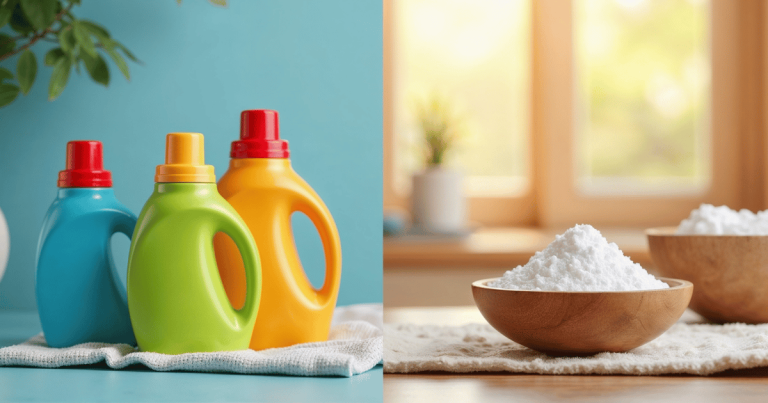
Here’s the deal: most conventional laundry products are still packed with nasty chemicals like phosphates, chlorine, and artificial fragrances.
Despite increased environmental awareness, many major brands continue to use these harmful ingredients, often hidden behind fancy “green” marketing.
These bad boys don’t just wash down the drain – they stick around in our water systems, harming aquatic life and messing with the ecosystem.
With microplastic pollution becoming an increasing concern in 2025, switching to natural laundry methods is more important than ever.
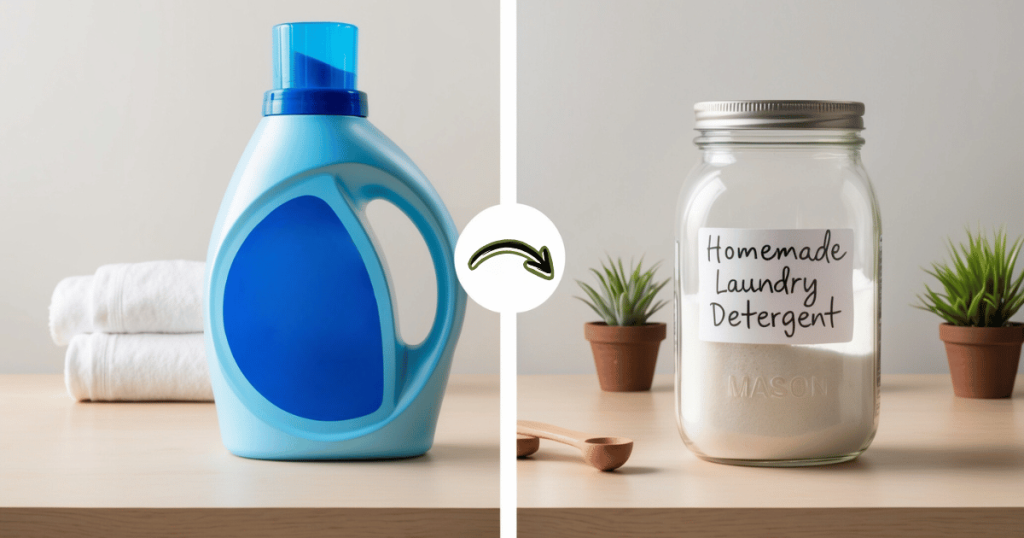
And let’s not even get started on what they do to our skin! I remember the day I realized my “sensitive skin” issues magically disappeared after switching to natural laundry methods. Mind. Blown.
2. Essential Natural Ingredients for Chemical-Free Laundry
First up, baking soda. This miracle powder isn’t just for making cookies rise – it’s a cleaning powerhouse! With the rising costs of commercial cleaning products in 2025, this affordable alternative is more valuable than ever.
Baking soda is great for neutralizing odors, softening water, and boosting your detergent’s cleaning power. Plus, it’s dirt cheap. Win-win!
Now, let’s talk about vinegar. I know what you’re thinking – “Eww, won’t my clothes smell like a salad?” Trust me, I had the same fear. But here’s the kicker: once your clothes dry, that vinegar smell vanishes into thin air!
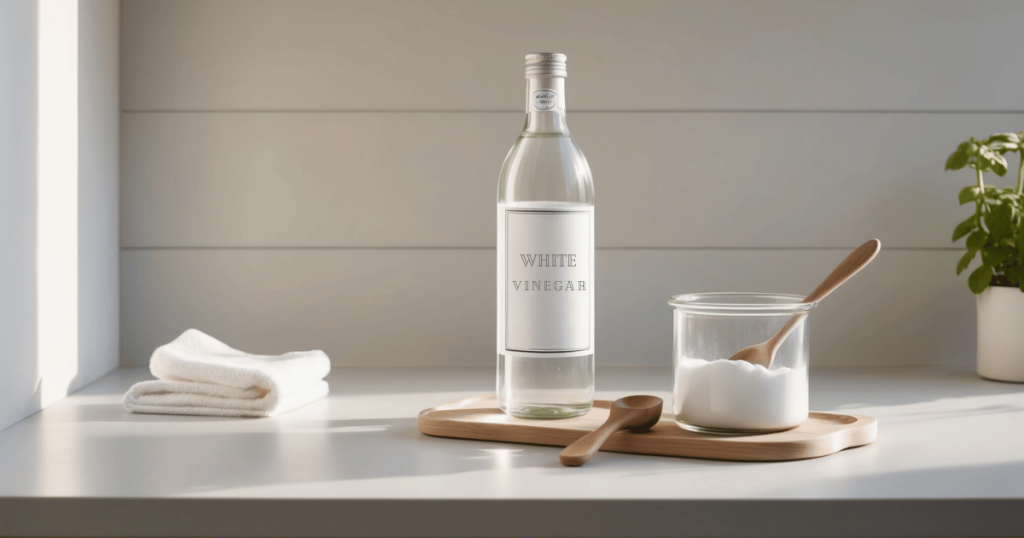
Vinegar is a fantastic natural fabric softener and helps to remove soap residue. Your clothes come out soft, fresh, and static-free. It’s like a spa day for your laundry!
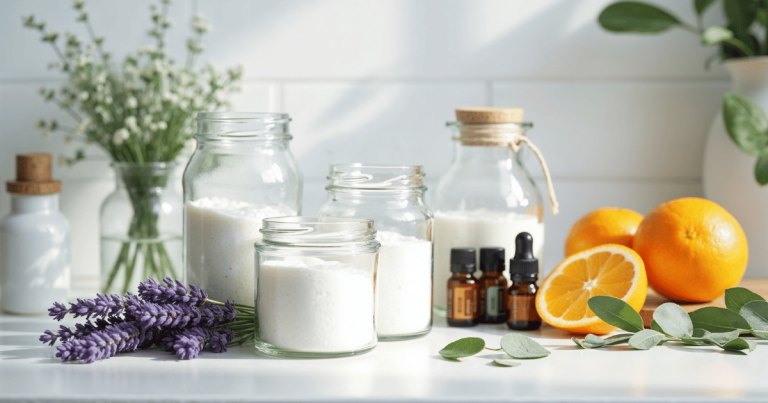
But wait, there’s more! If you’re missing that fresh-from-the-dryer scent, essential oils are here to save the day. A few drops of lavender, lemon, or eucalyptus oil can make your laundry smell like a dream.
So, next time you’re at the grocery store, skip the laundry aisle and head straight for the baking and cleaning sections. Your wallet, your health, and the planet will thank you.
3. DIY Chemical-Free Laundry Detergent Recipes
Let’s start with a basic powder detergent recipe. Trust me, this is easier than making a box of mac and cheese.
Powder Detergent
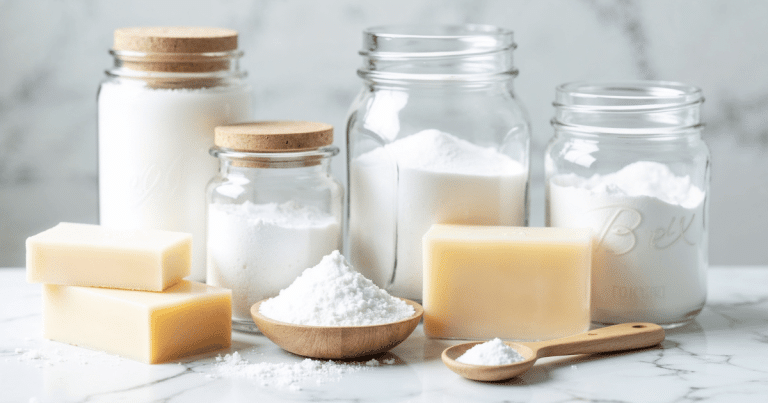
- 1 cup washing soda 1 cup baking soda
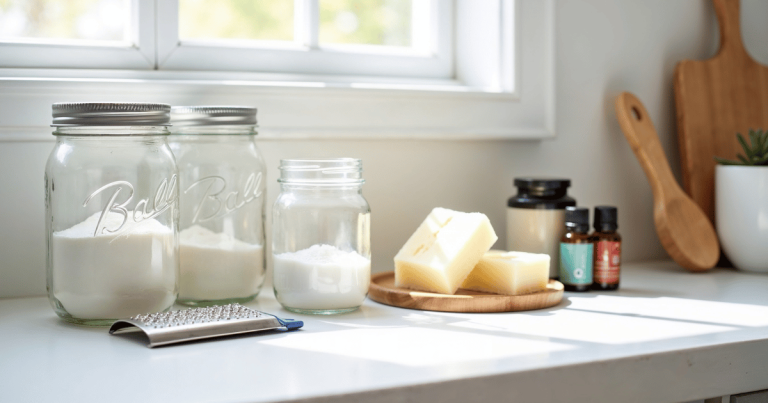
- 1 cup grated castile soap
Mix these bad boys together, and voila! You’ve got yourself some homemade laundry magic.
Use about 1-2 tablespoons per load, depending on how dirty your clothes are. (Pro tip: if you’re washing a load of my husband’s gym clothes, you might want to double that. Phew!)
Now, for my liquid-loving friends, here’s a recipe that’ll make you feel like a real chemist.
Liquid Detergent
- 1 cup washing soda
- 1/2 cup baking soda
- 1/2 cup liquid castile soap
- Hot water
Mix the washing soda and baking soda in a large pot with about 4 cups of hot water until dissolved. Add the castile soap, stir, and then fill the pot with hot water (about 8 cups total).
Let it cool and thicken overnight, and you’re good to go! Use about 1/4 cup per load.
Here’s where the fun really begins – customizing your scents! I like to add a few drops of lavender and lemon essential oils to my detergent for a fresh, clean smell.
But feel free to experiment! Peppermint for an invigorating boost, tea tree for its antibacterial properties, or maybe some eucalyptus to keep those germs at bay.
The best part about these DIY detergents? You know exactly what’s going into them. No more squinting at labels trying to pronounce ingredients that sound like they belong in a sci-fi movie.
Plus, you can adjust the recipes to suit your needs. Hard water? Add more washing soda. Extra smelly clothes? Bump up the essential oils.
So, grab your measuring cups and let’s get mixing! Your clothes are about to experience a level of clean they never knew existed. And who knows? You might just find your new favorite hobby. Laundry day will never be the same again!
4. Stain Removal Techniques Without Harsh Chemicals
First things first: the pre-treat. This is where the magic happens, folks. As soon as that red wine decides to jump ship from your glass to your favorite blouse, don’t panic!
Grab some salt or baking soda and sprinkle it generously on the stain. It’ll help absorb the liquid before it sets in. Then, mix equal parts water and white vinegar, and dab it on the stain. Let it sit for about 15 minutes before washing. I swear, it’s like a time machine for your clothes!
Now, let’s talk about the power of the sun. No, I’m not about to go all hippie on you (well, maybe a little).
Sunlight is an amazing natural stain remover and disinfectant. After treating a stain, hang your wet garment in direct sunlight. It’s particularly effective for organic stains like fruit, grass, or that mustard from your lunchtime hot dog.

But wait, there’s more! Let me introduce you to your new secret weapon: lemon juice. This citrusy wonder is great for brightening whites and tackling underarm stains.
Mix equal parts lemon juice and water, apply to the stain, and let it sit in the sun for an hour before washing. Your whites will be so bright, you’ll need sunglasses to look at them!
Now, I’ll be honest – I’ve had my fair share of stain removal fails. There was the time I tried to remove a grass stain with banana peel (thanks, internet). Let’s just say my shirt ended up with a grass stain AND a banana stain. But hey, you live and learn, right?
Remember, patience is key when it comes to natural stain removal. These methods might take a little longer than their chemical counterparts, but they’re gentler on your clothes and the environment. Plus, there’s something satisfying about outsmarting a stubborn stain using stuff from your kitchen.
So, the next time life throws a stain your way (literally), don’t reach for that bottle of bleach. Channel your inner eco-warrior and show that stain who’s boss – naturally! Your clothes, your skin, and Mother Earth will thank you. Now, if you’ll excuse me, I have a date with a chocolate ice cream stain and a lemon. Wish me luck!
5. Optimizing Your Washing Machine for Eco-Friendly Cleaning
First up: temperature. I used to think that hotter was always better when it came to cleaning clothes. Boy, was I wrong!
Unless you’re washing cloth diapers or trying to sanitize sick-bed sheets, cold water is your friend. It’s gentler on your clothes, kinder to the planet, and easier on your energy bill.
Now, let’s talk about loading. I know it’s tempting to cram as much as possible into each load – I’ve been guilty of playing laundry Tetris myself.
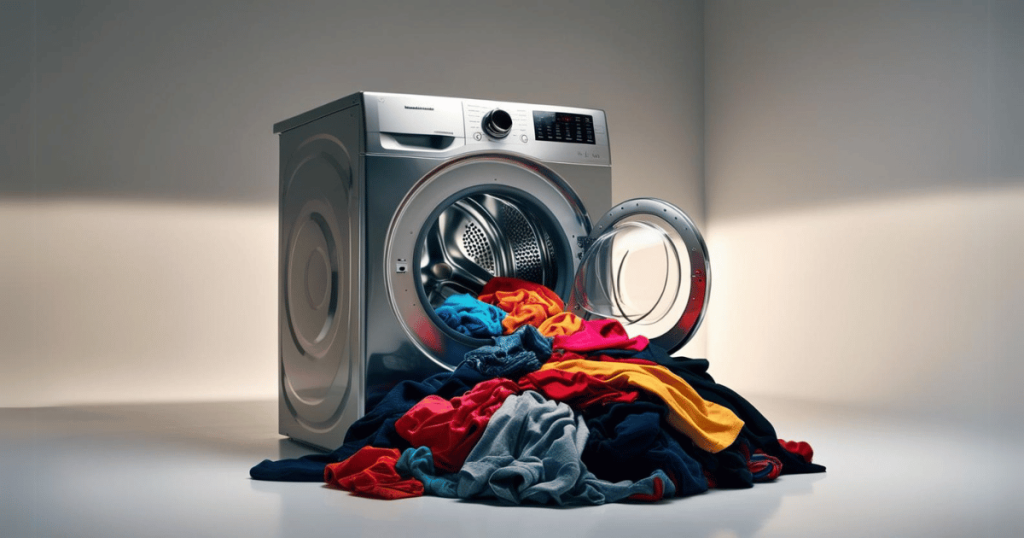
Overloading your machine means your clothes can’t move freely, and they won’t get as clean. Plus, it puts extra strain on your machine. Aim to fill the drum about 3/4 full.
Speaking of your machine, when was the last time you gave it a little TLC? I’m not talking about a full spa day (although, wouldn’t that be nice?), but a little maintenance goes a long way.
Once a month, run an empty cycle with hot water and a cup of white vinegar. It’ll help remove any buildup and keep your machine running smoothly.
Oh, and here’s a pro tip: leave the door open after each wash. I know, I know, it looks a bit odd, but it helps prevent mold and mildew growth. I used to always close mine, thinking I was being tidy, until I discovered a not-so-pleasant surprise growing in the gasket. Yuck!
Now, let’s talk about that little dispenser drawer. You know, the one that’s probably crusty with old detergent residue? Yeah, that one.
Give it a good clean every now and then. You’d be surprised how much gunk can build up in there. I once found what I can only describe as a detergent stalagmite growing in mine. Not my proudest moment, folks.
Lastly, consider upgrading to a high-efficiency machine if you’re in the market. These bad boys use less water and energy, which is great for both the environment and your utility bills.
6. Natural Fabric Softening Methods
First up on our softness tour: the miracle worker known as white vinegar. I know, I know, you’re probably thinking, “Vinegar? Isn’t that for salad dressing?” But hear me out!
A half cup of white vinegar in the fabric softener compartment of your washing machine will leave your clothes soft, static-free, and odor-neutral. I was skeptical at first, but after trying it, I was amazed.
My towels were fluffy, my sheets were silky, and there wasn’t a hint of vinegar smell. It was like a laundry miracle!
Now, let’s talk about wool dryer balls. These little wonders are like a massage for your clothes. They bounce around in the dryer, separating your laundry and allowing hot air to circulate more efficiently.
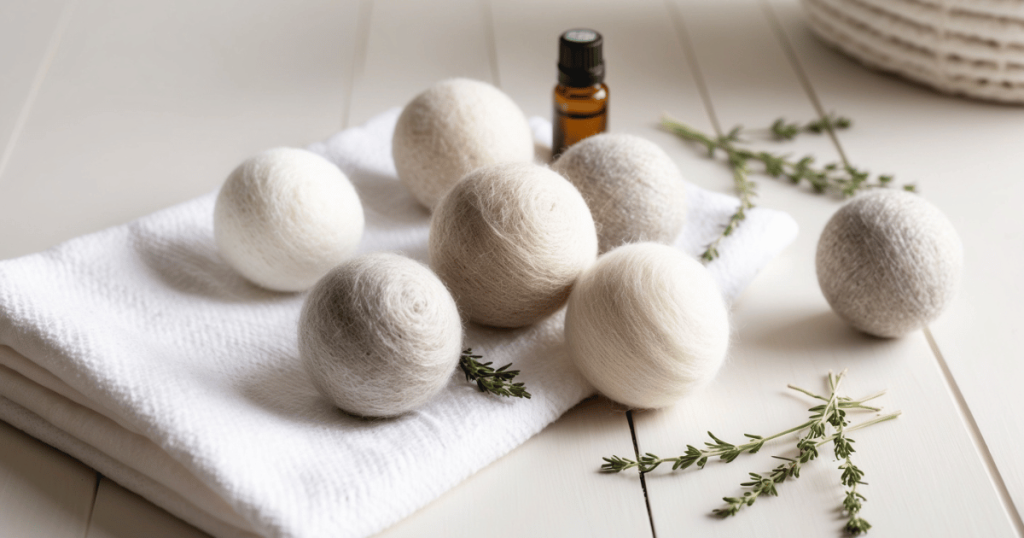
The result? Softer clothes and less drying time. Plus, you can add a few drops of your favorite essential oil to the balls for a natural fragrance boost. I like to use lavender – it makes my laundry smell like a fancy spa.
But here’s the real MVP of natural fabric softening: good old-fashioned line drying. I know it sounds like something your grandma would do, but trust me, there’s nothing like the feel of sun-dried sheets. Plus, the UV rays from the sun naturally disinfect and freshen your laundry.
Now, I’ll be honest – my first attempt at line drying wasn’t exactly a success. I may have forgotten about a load of laundry during a surprise rainstorm. Let’s just say my clothes got an extra rinse cycle courtesy of Mother Nature. But hey, you live and learn, right?
One word of caution: if you have sensitive skin, you might want to skip the essential oils.
Remember, the key to natural fabric softening is experimentation. What works for one person might not work for another.
The important thing is that you’re taking steps to reduce your chemical use and treat your clothes (and the environment) with a little more TLC.
7. Tackling Odors Without Chemical Fresheners
For odor-busting arsenal: the mighty baking soda. This unassuming white powder is like kryptonite for smells. Sprinkle some in your wash cycle, and it’ll neutralize odors faster than you can say “what’s that smell?”
I once rescued a set of gym clothes that I’d accidentally left in a gym bag for… well, let’s just say longer than I’d care to admit. A hefty dose of baking soda in the wash, and voila! They smelled fresh as a daisy. (Okay, maybe not quite a daisy, but definitely not like a locker room anymore.)
Now, let’s talk about herbal sachets. These little bags of sweetly scented herbs are like a spa day for your clothes. Tuck them into your drawers or hang them in your closet for a subtle, natural fragrance.

I like to make my own with dried lavender, rosemary, and a few drops of essential oil. Fair warning though: the first time I made these, I got a little overzealous with the essential oils. My closet smelled great, but I was walking around like a human air freshener for days!
But here’s the real secret weapon in our odor-fighting toolkit: good old sunshine and fresh air. There’s a reason our grandmas used to hang laundry outside, and it wasn’t just to show off their fancy clothespins.
UV rays are natural disinfectants, and fresh air can work wonders on even the most stubborn smells. I once left a musty old quilt out in the sun for a day, and it came back smelling like a spring meadow. It was like some kind of laundry alchemy!
One word of caution: if you’re drying clothes outside, watch out for pollen if you have allergies. I learned this the hard way when I brought in a load of “fresh air” laundry and spent the next hour sneezing. Not exactly the fresh feeling I was going for!
8. Chemical-Free Laundry Care for Delicate Fabrics
When it comes to delicates, handwashing is your new best friend. I know, I know, it sounds like a chore straight out of a Jane Austen novel. But trust me, once you get the hang of it, it’s not so bad.
Plus, it’s a great excuse to have a zen moment in your day. I like to pretend I’m a laundress in a fancy Victorian manor. Hey, whatever makes laundry more fun, right?
For handwashing, ditch the harsh detergents and opt for something gentler. A few drops of castile soap or a specialized wool wash will do the trick. And remember, less is more!
Now, let’s talk about water temperature. When it comes to delicates, cold is gold. Hot water can cause shrinkage, fading, and damage to delicate fibers.
I once washed a wool sweater in hot water. Let’s just say it would have fit my cat perfectly afterwards. (Note: do not attempt to dress your cat in shrunken wool sweaters. Trust me on this one.)
Here’s a pro tip: never wring out your delicates. I know it’s tempting to get out as much water as possible, but wringing can stretch and damage the fibers.
Instead, gently squeeze out excess water and lay the item flat to dry. I like to use a clean white towel to blot out extra moisture. Just be careful not to rub – we’re going for gentle pats, not an aggressive towel massage.
Air drying is your delicates’ best friend. Avoid the dryer at all costs – it’s like a torture chamber for fancy fabrics.
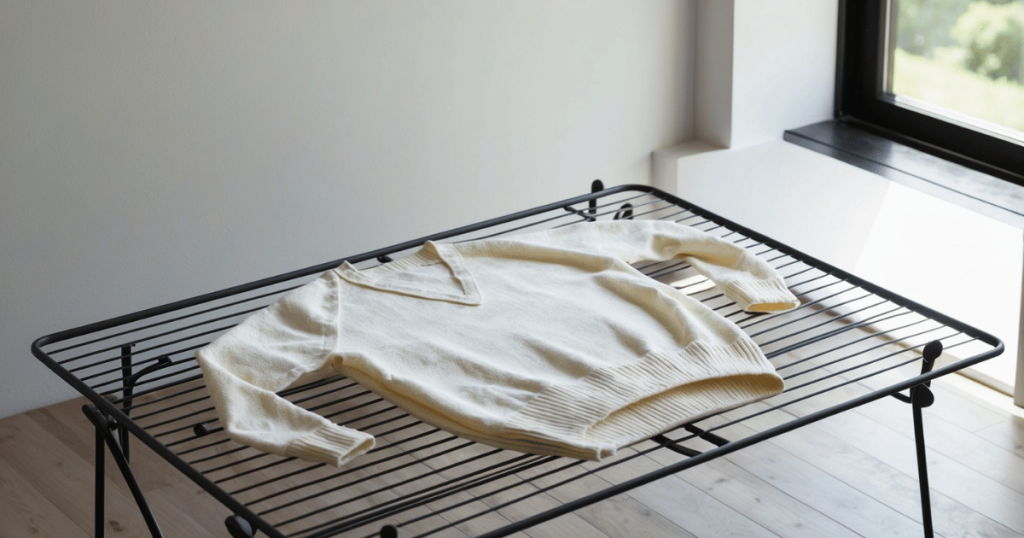
Instead, lay sweaters and knits flat to dry (reshape them gently while they’re damp), and hang more structured items like blouses. Just be sure to use padded hangers for anything delicate – those wire hangers are for horror movies, not your silk shirts!
Oh, and here’s something I wish someone had told me earlier: be careful with dark or brightly colored delicates. They can bleed dye like crazy.
9. Eco-Friendly Ironing and Wrinkle-Removal Tips
Let’s talk about natural starch alternatives. Forget those aerosol cans of chemical starch – we’re going old school.
Did you know you can make your own starch with just cornstarch and water? Mix one tablespoon of cornstarch with two cups of water, pour it into a spray bottle, and voila! You’ve got yourself some eco-friendly starch.
Now, onto the main event: ironing. I know, I know, it’s not exactly the most thrilling activity. But with a few eco-friendly tweaks, we can make it a little more exciting (or at least less of a chore).
First tip: steam is your friend. Before you plug in that iron, try hanging your wrinkled clothes in the bathroom while you take a hot shower. The steam will help relax those wrinkles, making them easier to iron out. Plus, you get to multitask – win-win!
Speaking of steam, here’s a little trick I discovered by accident (aka, I was too lazy to get out the ironing board). Hang your wrinkled item on a hanger, then use your iron’s steam function to blast it with steam.
Work from top to bottom, keeping the iron about 6 inches away from the fabric. It’s like a mini spa day for your clothes!
But what if you’re in a rush and don’t have time to iron? Fear not, my wrinkle-hating friends! It’s time to whip up a batch of wrinkle-release spray.
Mix one cup of water with one tablespoon of white vinegar and a few drops of essential oil in a spray bottle. Lightly mist your wrinkled item, then gently tug and smooth the fabric. It’s like magic in a bottle! I use this all the time when traveling – it’s saved me from looking like a rumpled mess in more than one business meeting.
Now, I’ll be honest – my first attempt at making wrinkle-release spray didn’t go quite as planned. I may have gotten a little overzealous with the vinegar, and ended up smelling like a walking salad. But hey, you live and learn, right?
Remember, the key to eco-friendly ironing is to work smarter, not harder. Use the lowest heat setting that will still get the job done.
And whenever possible, opt for air-drying your clothes on hangers – it can prevent a lot of wrinkles in the first place.
Conclusion
We kicked things off by understanding why ditching those chemical-laden products is so important for our health and the environment, especially as we face increasing water scarcity and pollution challenges in 2025.
Then we dove into the magical world of natural ingredients – who knew baking soda and vinegar could be such laundry superstars?
With the current focus on reducing household chemical exposure and microplastic pollution, these natural alternatives are more relevant than ever.
We whipped up some homemade detergents, tackled stubborn stains with the power of nature, and even turned our washing machines into eco-warriors. By making these changes, we’re not just saving money – we’re contributing to a healthier planet.
So, what’s next? Well, that’s up to you! Maybe you’ll start small by swapping out your detergent for a homemade version. Every load of chemical-free laundry is a win for you and the environment.
To learn about more ways to transform your home, check out The Ultimate Non-Toxic Home Guide: Live Healthier in 2025.