Why Commercial Detergents Trigger Allergies: Understanding Sensitivities
Like many of you, my journey into understanding why commercial detergents trigger allergies started when my husband had an uncomfortable personal experience. After switching to a new “premium” detergent, we noticed his skin becoming increasingly irritated.
As an engineer turned health advocate, I dove deep into the research, and what I discovered about commercial detergents was eye-opening! A recent study found that even when household laundry detergents are highly diluted, they can harm the skin’s protective barrier. This suggests that regular exposure to laundry detergents might weaken our skin’s defenses and potentially lead to skin issues.
The more I researched why commercial detergents trigger allergies, the more important I realized it was to share this information with others. Let me share what I’ve learned about why commercial detergents trigger allergies and, more importantly, what we can do about it. Get ready – some of these findings might really surprise you!
Key Takeaways
Before we dive deep into the details, here are the essential points about why commercial detergents trigger allergies:
- Common synthetic ingredients in commercial detergents can damage your skin’s protective barrier, leading to allergic reactions
- Symptoms can range from skin rashes to unexpected respiratory issues
- Fragrance mixtures in detergents can contain up to 100 undisclosed chemicals
- Detergent sensitivity can develop gradually, even with products you’ve used for years
- Natural alternatives and proper washing techniques can significantly reduce allergic reactions
- Different fabrics interact uniquely with detergents, requiring specific washing approaches
- Double rinsing and temperature control can help minimize detergent residue
- Symptoms may not appear immediately, making it crucial to monitor your body’s responses
Common Ingredients in Commercial Detergents That Trigger Reactions
The biggest culprits in most commercial detergents are synthetic surfactants, particularly sodium lauryl sulfate (SLS) and sodium laureth sulfate (SLES). These are what create that satisfying sudsing action we’ve been conditioned to associate with “clean.” But here’s the thing – those same surfactants can strip away your skin’s natural protective barrier, leading to irritation and allergic reactions.
Then there’s the fragrance issue. I remember being shocked when I learned that a single “fragrance” listing on a label can actually represent a mixture of up to 100 different chemicals! Many of these are known sensitizers, meaning they can trigger allergic responses with repeated exposure. No wonder my skin was getting irritated!
But it’s not just the obvious ingredients we need to watch out for. Those innocent-sounding “optical brighteners” that make your whites look whiter? They’re actually chemicals that stick to your clothes and can transfer to your skin, potentially causing reactions. And don’t even get me started on enzymes – while they’re great at breaking down stains, they can also be powerful allergens for sensitive individuals.
Understanding Detergent Allergy Symptoms
Let’s talk about what these allergic reactions actually look like – because trust me, I wish I had known these signs earlier! The tricky thing about detergent allergies is that they can manifest in so many different ways.
The most common symptom I see in my research is contact dermatitis – that’s fancy medical speak for red, itchy, or inflamed skin. But here’s what’s interesting: the rash doesn’t always show up where you’d expect.
While you might get irritation anywhere your clothes touch your skin, I’ve found that the most common spots are areas where clothing fits tightly or where you sweat more, like under bra lines or around waistbands.
Remember how I mentioned respiratory symptoms earlier? That’s another sneaky way detergent allergies can affect you. Common respiratory symptoms can include:
- Sneezing
- Runny nose
- Coughing
- Wheezing
- Difficulty breathing (in severe cases)
What really fascinates me is how these reactions can develop over time. You might use the same detergent for years without issues, then suddenly develop sensitivity. This is called cumulative sensitization, and it’s one reason why identifying detergent allergies can be so challenging.
The Science Behind Detergent Sensitivities
Now, let me put on my engineer hat for a moment and explain what’s actually happening when detergents trigger allergies. Don’t worry – I’ll keep it simple and practical!
The skin’s protective barrier (called the stratum corneum – but let’s just call it your skin barrier) is like a sophisticated security system. It’s designed to keep harmful substances out while maintaining proper hydration. Commercial detergents can compromise this barrier in two main ways:
First, the harsh surfactants I mentioned earlier can literally create microscopic gaps in your skin barrier. Think of it like creating tiny holes in a fence – suddenly, things that shouldn’t get through have a way in. This is why some people develop reactions not just to the detergent itself, but become more sensitive to other substances too.
Second, the residue left behind on clothes (even after rinsing) can continue to interact with your skin over time. During my research, I conducted a simple experiment: I washed a white cotton t-shirt with a standard commercial detergent, rinsed it thoroughly, then examined it under UV light. The amount of brightener residue still present was astounding!
Natural Alternatives and Prevention Strategies
After dealing with my own sensitivities, I’ve spent countless hours testing and researching alternatives. Here’s what actually works:
Plant-based detergents have come a long way, and they’re my top recommendation for most people with sensitivities. Look for products that use saponified oils (real soap) or gentler surfactants derived from coconut or other plant sources. Just be sure to check that “plant-based” isn’t just a marketing term – some products use this label while still containing synthetic irritants.

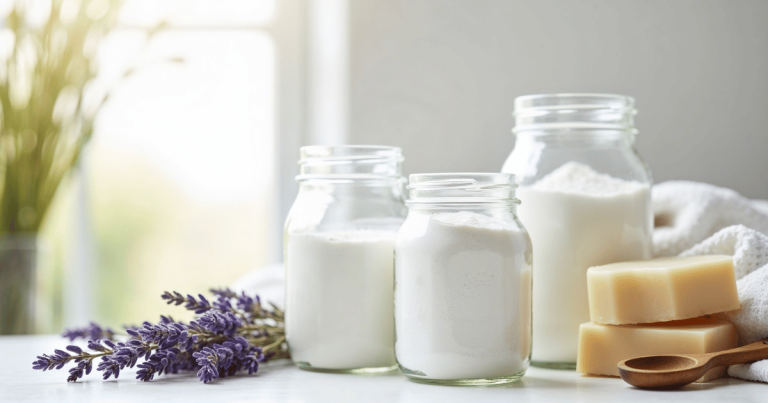
For the ultra-sensitive, I’ve had great success with this simple DIY solution:
- 1 cup baking soda
- 1 cup washing soda (sodium carbonate)
- 1 cup grated castile soap
- 20 drops of essential oil (optional, and only if you don’t have fragrance sensitivities)
But here’s the most important tip I can share: It’s not just about what detergent you use, but how you use it. Through trial and error, I’ve found that double rinsing and using warm (not hot) water makes a huge difference in removing detergent residue. I also discovered that running an empty cycle with just vinegar once a month helps prevent detergent buildup in your washing machine.
Special Considerations for Different Fabrics
One thing that surprised me during my research was how differently various fabrics interact with detergents. Cotton, for instance, tends to hold onto detergent residue more than synthetic materials. But synthetics can trap certain chemicals in their fibers, potentially causing longer-term exposure.
Here’s what I’ve learned works best for different materials:
For cotton and natural fibers:
- Use slightly less detergent than recommended
- Add an extra rinse cycle
- Avoid high heat drying (it can “bake in” residue)
For synthetics:
- Pre-soak in plain water to prevent detergent from binding too strongly
- Use liquid detergents rather than powders
- Avoid fabric softeners completely
Conclusion
Understanding why commercial detergents trigger allergies has been quite the journey for me, and I hope sharing what I’ve learned helps you navigate your own laundry sensitivities.
The research is clear: commercial detergents can trigger allergies through multiple mechanisms, from harsh surfactants to hidden fragrances. Remember, everyone’s skin is different, so what works for one person might not work for another. The key is to pay attention to how your body responds and make adjustments accordingly.
If you’re experiencing symptoms from commercial detergents triggering allergies, start by switching to a gentler detergent and implementing some of the washing techniques we’ve discussed. And don’t forget – sometimes the simplest solution (like that extra rinse cycle) can make the biggest difference!
Frequently Asked Questions
How long does it take for detergent allergy symptoms to appear?
Symptoms can appear immediately or develop over several days of exposure. Some people may use a product for years before developing sensitivity.
Can detergent allergies cause respiratory problems?
Yes, inhaling detergent particles or residue can trigger respiratory symptoms like sneezing, coughing, and in some cases, asthma-like symptoms.
Are “hypoallergenic” detergents always safe?
Not necessarily. The term “hypoallergenic” isn’t regulated, so it’s important to check the actual ingredients rather than relying on labels alone.
How can I test if I’m allergic to my detergent?
Consider doing a patch test on a small area of skin, or try switching to a fragrance-free, dye-free detergent for a few weeks to see if symptoms improve.
Will vinegar in the rinse cycle help remove detergent residue?
Yes, adding 1/2 cup of white vinegar to the final rinse can help remove detergent residue and soften clothes naturally.