9 Best Non-Toxic Cookware Options for Healthier Cooking in 2024
Did you know that the cookware you use could be secretly sabotaging your health? It’s true!
A shocking study found that certain types of cookware can leach harmful chemicals into your food, potentially increasing your risk of certain cancers and other health issues. But don’t panic! I’m here to guide you through the world of non-toxic cookware and help you make healthier choices for your kitchen.
So, grab a cup of your favorite beverage, and let’s dive into the world of best non-toxic cookware together. I promise it’ll be fun, informative, and maybe even a little bit quirky – just like cooking should be!
Understanding Non-Toxic Cookware: What Makes it Safe?
Alright, let’s start with the basics. What exactly is non-toxic cookware, and why should you care? Well, my friends, non-toxic cookware is like the superhero of the kitchen world – it’s cookware made from materials that don’t react with your food or release harmful chemicals when heated. Pretty cool, right?
When I first started learning about this stuff, my mind was blown. I mean, I’d been using non-stick pans for years, thinking I was being all fancy and modern. Little did I know, I was basically cooking on a chemical cocktail!
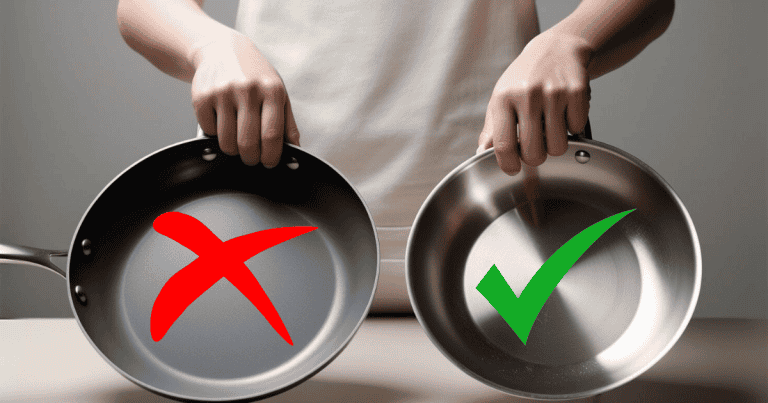
Traditional non-stick cookware often contains nasty chemicals like PFOA and PTFE (you might know PTFE by its brand name, Teflon). These bad boys can release toxic fumes when overheated and may even flake off into your food. Yuck!
But here’s the good news: there are tons of awesome alternatives out there that are safe, durable, and just as easy to use. We’re talking materials like stainless steel, cast iron, ceramic, and even titanium. These materials are inert, which means they don’t react with your food or leach chemicals. It’s like giving your meals a safety bubble!
Better health
You’re reducing your exposure to potentially harmful chemicals. It’s like giving your body a high-five!
Improved taste
Many people swear that food cooked in non-toxic pans tastes better. I was skeptical at first, but after trying it, I’m a total convert.
Durability
A lot of non-toxic options are super durable. I’ve got a cast iron pan that’s older than me (thanks, Grandma!).
Eco-friendly
Many non-toxic materials are more sustainable and environmentally friendly. It’s like you’re saving the planet, one stir-fry at a time!
What are the Best Non-Toxic Cookware Options for 2024?
Alright, drum roll, please! It’s time for the moment you’ve all been waiting for – the best non-toxic cookware options that’ll rock your kitchen in 2024. I’ve tested, tasted, and maybe even dropped a few of these (oops!), so you can trust that this list is battle-tested and chef-approved.
1. Stainless Steel Cookware

This is my ride-or-die, go-to for almost everything. It’s like the superhero of cookware – tough, versatile, and doesn’t react with your food. Plus, it gives you those gorgeous brown bits when you’re searing meat. Flavor town, here we come!
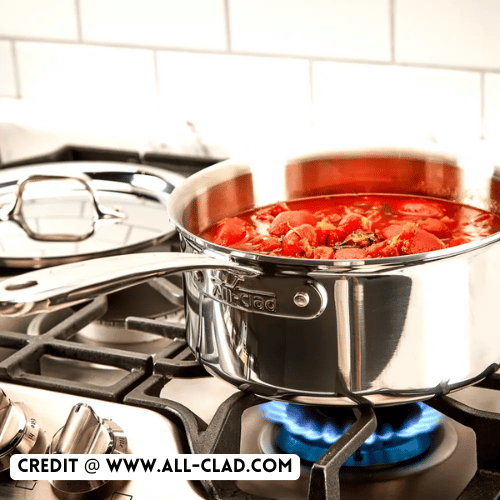
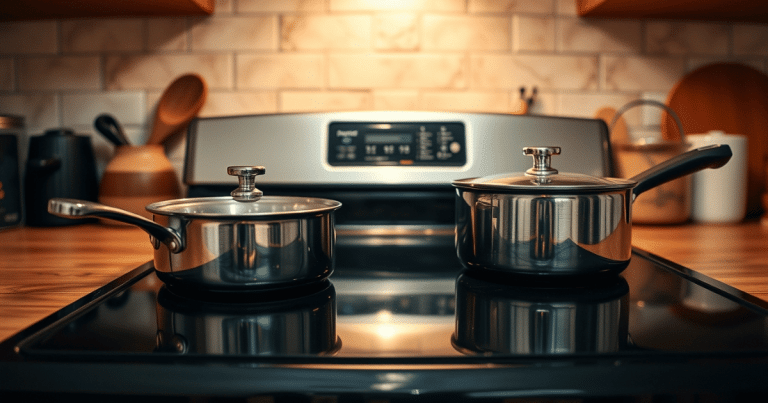
All-Clad D3 Stainless Steel Collection
Invest in the All-Clad D3 collection for a lifetime of safe, high-performance cooking. Start with these essential pieces:
- 10-inch fry pan
- 3-quart saucepan with lid
- 6-quart stockpot with lid
These three pieces will handle 90% of your cooking needs while providing the safest, most durable cooking surface available. Your health and culinary results are worth the investment in premium stainless steel cookware that will last for generations.
Pros
Cons
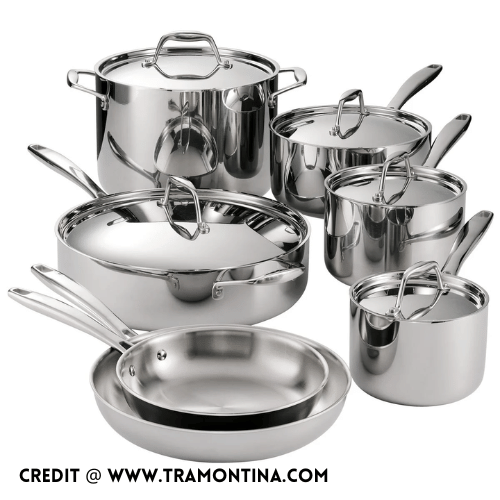
Tramontina Tri-Ply Clad
- Solid performance at lower price point
- Good heat distribution
- Lifetime warranty
- Thinner walls than premium brands
2. Cast Iron Skillets and Pots

Oh man, the flavor this adds to food! It’s like cooking with a piece of history. Plus, it gives you a mini arm workout every time you use it. Who needs a gym membership when you’ve got cast iron, am I right?
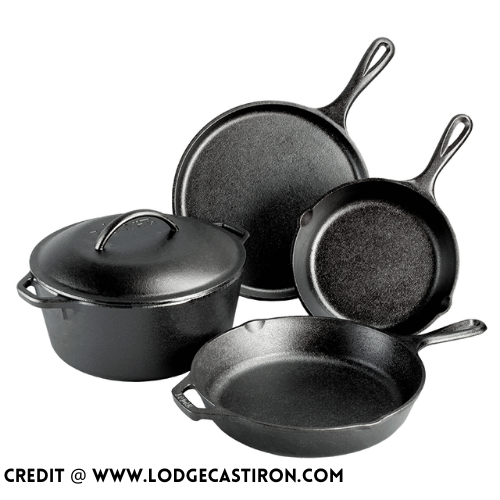
Lodge Pre-Seasoned Cast Iron Collection
Begin your cast iron journey with Lodge’s essential pieces:
- 10.25-inch skillet ($25-30)
- 5-quart Dutch oven ($50-60)
- Reversible griddle ($45-50)
These pieces will give you a versatile foundation for everything from searing steaks to baking bread. For under $150, you’ll own cookware that will become family heirlooms. Your investment will continue to improve with each use, creating an increasingly non-stick surface that’s completely natural and chemical-free.
Pros
Cons
3. Ceramic-Coated Cookware
These are the pretty ones. They make your kitchen look good and your food taste great. Just be careful not to drop them (learned that the hard way). And yes, they’re actually non-stick without the nasty chemicals!
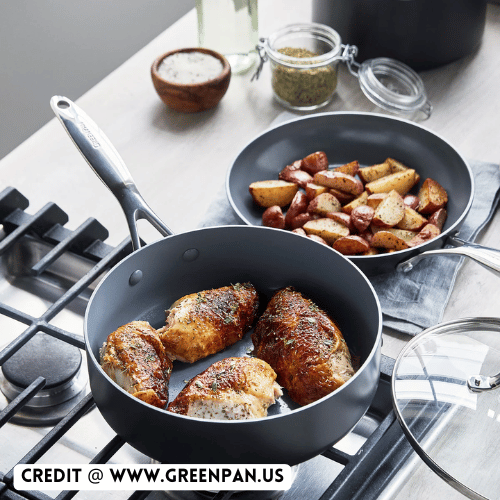
GreenPan Valencia Pro Collection
Invest in the GreenPan Valencia Pro essentials:
- 10-inch frying pan ($60-70)
- 3-quart saucepan with lid ($80-90)
- 5-quart sauté pan with lid ($100-110)
For about $250, you’ll have a complete set of non-toxic, high-performance cookware. While ceramic coatings don’t last forever, these pieces offer the perfect balance of safety, performance, and ease of use. Ideal for health-conscious cooks who want the convenience of non-stick without the concerns of traditional PTFE coatings.
Pros
Cons
4. Glass Cookware

Perfect for baking and storing leftovers. And you can see what’s cooking without lifting the lid – sneaky! I once tried to make a soufflé in a glass dish. Let’s just say it didn’t rise to the occasion, but at least I could see my failure in crystal clear detail!
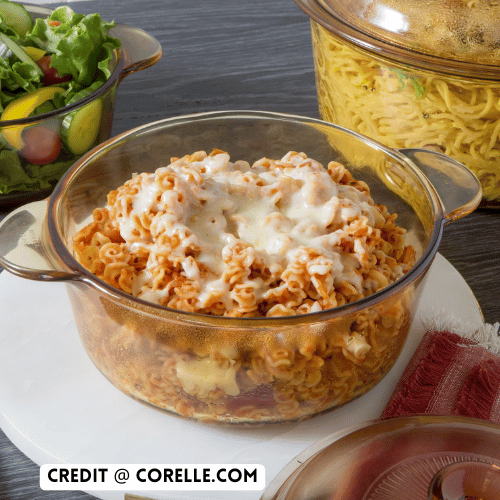
VISIONS by Corning Glass Cookware
Start your glass cookware collection with these VISIONS essentials:
- 2.5L Saucepan with lid ($80-90)
- 3.5L Dutch Oven ($100-110)
- 2.25L Covered Casserole ($70-80)
These three pieces provide versatility for stovetop cooking, baking, and food storage. While the initial investment of ~$250 may seem high, these pieces will last decades with proper care and provide the safest, most chemical-free cooking surface available.
Pros
Cons
5. Carbon Steel Pans
It’s like the cool younger sibling of cast iron. Lighter, but still tough as nails. These pans develop a natural non-stick patina over time. It’s like they’re aging like fine wine, but for your kitchen.
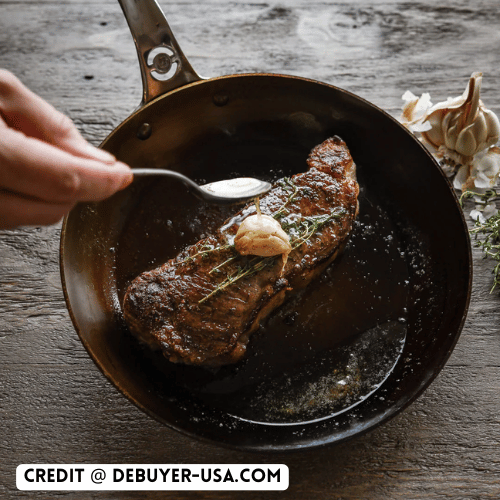
de Buyer Mineral B Pro Collection
Begin your carbon steel collection with these de Buyer essentials:
- 12.5-inch frying pan ($80-90)
- 9.5-inch frying pan ($60-70)
- 11-inch crepe pan ($70-80)
Total investment around $220 for three professional-grade pieces that will last a lifetime. Perfect for those wanting the benefits of cast iron with more maneuverability and temperature control.
Pros
Cons
6. Titanium Cookware

Lightweight and super strong. It’s like the sports car of cookware. I feel like a fancy chef every time I use mine, even if I’m just making scrambled eggs.
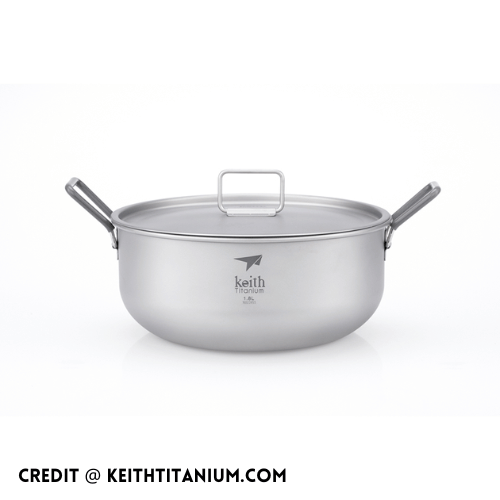
Keith Titanium Collection
Invest in these Keith Titanium essentials:
- 1.2L Pot with lid ($80-90)
- 8-inch Frying Pan ($70-80)
- 2L Pot with lid ($100-110)
Total investment around $250-280 for a lifetime of chemical-free cooking. Perfect for health-conscious cooks who prioritize purity and lightweight handling. These pieces excel in both home kitchen and outdoor settings.
Pros
Cons
7. Enamel-Coated Cast Iron

All the benefits of cast iron, but with a colorful, non-stick surface. It’s the best of both worlds! Plus, it’s so pretty you’ll want to leave it out on your stove all the time. #KitchenDecor
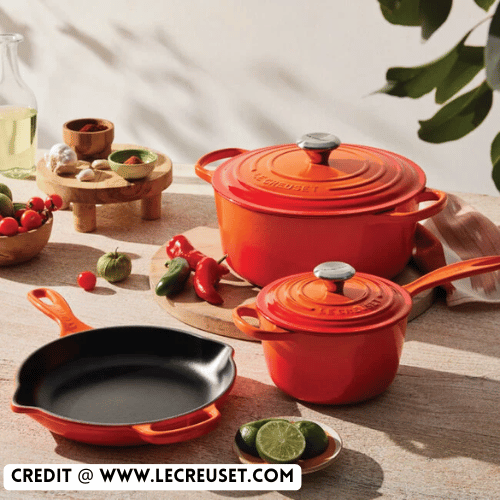
Le Creuset Signature Collection
Start your Le Creuset collection with these essential pieces:
- 5.5-quart Round Dutch Oven ($350-400)
- 3.5-quart Braiser ($365-380)
- 10.25-inch Signature Skillet ($190-220)
While the initial investment of ~$900 is significant, these pieces become family heirlooms, offering decades of non-toxic cooking performance with proper care.
Pros
Cons
8. 100% Ceramic Cookware

Not to be confused with ceramic-coated, this is the real deal. It’s completely inert and great for slow-cooking. Just don’t expect it to be non-stick – that’s what your cooking skills are for!
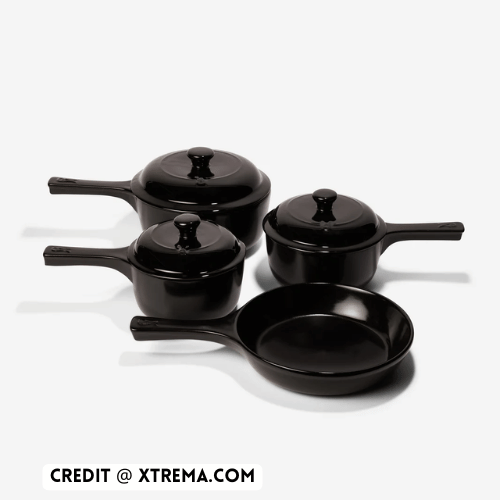
Xtrema Ceramic Cookware
Begin your pure ceramic collection with these Xtrema essentials:
- 10-inch Versa Skillet with lid ($159-179)
- 3.5-quart Traditions Saucepan ($189-209)
- 10-inch Wok with lid ($179-199)
Total investment around $550 for completely non-toxic, chemical-free cooking. Perfect for those with metal sensitivities or those seeking the purest cooking experience possible.
Pros
Cons
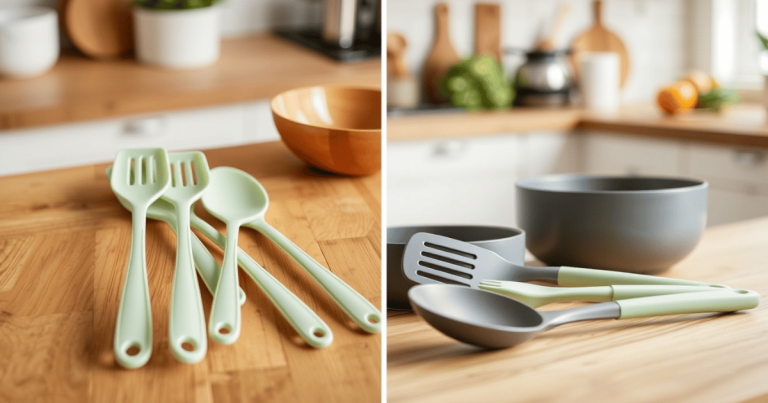
9. Bamboo Steamers and Utensils
Okay, not technically cookware, but these are fantastic for charcuterie boards. Plus, they’re sustainable and give your kitchen a zen vibe. Namaste, delicious food!
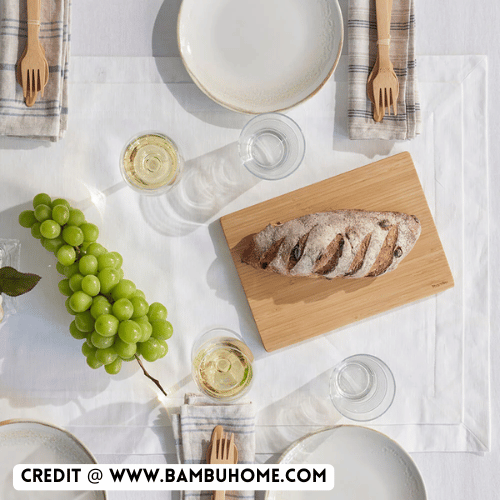
Bambu Home Organic
- USDA Certified Organic
- Hand-finished utensils
- Multiple styles available
- Fair trade certified
- Naturally antibacterial
- Chemical-free finish
Remember, no single type of cookware is perfect for everything. It’s all about finding the right tool for the job. I’ve got a kitchen full of different pots and pans, and let me tell you, my husband thinks I’m crazy. But hey, a chef needs their tools, right?
Factors to Consider When Choosing Non-Toxic Cookware
Alright, so now you’re probably thinking, “This is great and all, but how do I know which one to choose?” Don’t worry, I’ve got you covered! Choosing the right non-toxic cookware is like finding the perfect dance partner – it’s all about compatibility and personal style. Here are some factors to consider:
Cooking Habits and Preferences
Are you a stir-fry master or a slow-cooker enthusiast? Do you love to sear steaks or are you more of a gentle simmer kind of cook? Your cooking style will help determine which type of cookware is best for you. For example, if you’re all about that high-heat sear, cast iron or carbon steel might be your new BFFs.
Heat Conductivity and Distribution
Some materials, like copper and aluminum, are fantastic at conducting heat evenly. Others, like stainless steel, need a little help (hello, tri-ply construction!). Think about how important even heating is for your cooking style. If you’re prone to burning things (no judgment, we’ve all been there), you might want to opt for something with great heat distribution.
Durability and Longevity
Let’s be real – cookware can be an investment. You want something that’s going to last, right? Materials like stainless steel and cast iron are practically indestructible. I’ve got a stainless steel pot that’s survived more cooking disasters than I care to admit, and it still looks great!
Ease of Maintenance and Cleaning
Be honest with yourself here. Are you the type who loves to meticulously care for your cookware, or do you need something more low-maintenance? Some materials, like cast iron and carbon steel, need a bit more TLC, while others, like stainless steel and ceramic, are pretty easy to care for. I once ruined a beautiful carbon steel pan because I didn’t season it properly. Learn from my mistakes, folks!
Compatibility with Different Stovetops
This one’s important! Not all cookware plays nice with all stovetops. If you’ve got an induction cooktop, for example, you’ll need to make sure your cookware is magnetic. I learned this the hard way when I tried to use my favorite ceramic pan on my new induction stove. Spoiler alert: it didn’t work.
Budget Considerations:
Let’s talk money, honey. Non-toxic cookware comes in a wide range of prices. While some options (like high-end copper or enameled cast iron) can be pricey, there are plenty of affordable options too. Remember, though, that this is an investment in your health and your cooking. Sometimes, it’s worth splurging a little for quality.
Here’s a pro tip: start with one or two essential pieces and build your collection over time. Maybe begin with a good stainless steel skillet and a cast iron pan. See how you like cooking with them, and then expand from there. It’s like dating – you’ve got to try a few options before you find your perfect match!
Key Takeaways
Here’s the bottom line: making the switch to non-toxic cookware is one of the best things you can do for your health and your cooking.
I know it can feel overwhelming at first. Trust me, I’ve been there! But remember, you don’t have to overhaul your entire kitchen overnight. Start small, maybe with a good stainless steel pan or a versatile cast iron skillet. As you get more comfortable, you can expand your non-toxic cookware collection.
FAQs
What is the healthiest non-toxic cookware?
For those seeking the absolute safest cooking option, especially individuals with metal sensitivities, pure ceramic cookware represents the gold standard in non-toxic cooking.
Is Tramontina non-toxic?
Tramontina’s tri-ply stainless steel cookware is considered non-toxic and safe for everyday cooking. Their stainless steel line is made with 18/10 food-grade stainless steel (18% chromium, 10% nickel) and an aluminum core, containing no PFOA, PTFE, or other harmful chemicals found in non-stick coatings.